How Much Does a Guest Post Cost?
A guest post on a real website with genuine traffic usually costs $70 to $250 in 2026, including the article and the outreach. Finance and health sit at the top of that range. Strong, high-traffic publications cost several hundred dollars or more, and anything under $50 almost always means a site that exists to sell links.
That range comes from the average prices I see across niches for sites with a DR of 15–30 and 5,000 to 20,000 monthly visitors. It sits close to what the larger market studies found. PressWhizz looked at 22,703 real orders and found a median price of $112, with an average of $164. BuzzStream’s 2026 study of 257,267 marketplace sites put the average vendor price at $461, or $295 when buying straight from the site.
The gap between those numbers is the first thing to understand about guest post pricing. The same kind of placement can cost very different amounts depending on who sells it, what they include and how much checking they do.
I’m Subham Chowdhury. I’ve worked in SEO since 2014 and I place guest posts for clients through manual outreach. The numbers in this guide come from that day-to-day work, not a survey, so you can hold the quotes you receive up against them.
Every site sets its own fee, and two sites in the same niche can ask very different amounts depending on their traffic, authority and how often they accept guest posts. Use these numbers to understand what’s normal, then judge each site on its own.
1. Guest Post Prices by Niche (2026)
This is an average reference for one guest post on a site with a DR of 15–30 and 5,000 to 20,000 monthly organic visitors, with the article and outreach included. Real prices move up or down with each site’s quality, traffic and authority, so treat these as typical ranges rather than fixed rates.
| Niche | Typical DR | Monthly traffic | Average price |
|---|---|---|---|
| Tech / SaaS | 15–30 | 5K–20K | $100–$180 |
| Finance | 15–30 | 5K–20K | $150–$250 |
| Health & Fitness | 15–30 | 5K–20K | $130–$220 |
| Business | 15–30 | 5K–20K | $110–$180 |
| Automotive | 15–30 | 5K–20K | $110–$180 |
| Education | 15–30 | 5K–20K | $90–$160 |
| Fashion & Beauty | 15–30 | 5K–20K | $90–$160 |
| Travel | 15–30 | 5K–20K | $80–$150 |
| Home & Lifestyle | 15–30 | 5K–20K | $80–$140 |
| Food | 15–30 | 5K–20K | $80–$140 |
| Pets | 15–30 | 5K–20K | $80–$140 |
| Personal Development | 15–30 | 5K–20K | $80–$140 |
| Hobbies | 15–30 | 5K–20K | $70–$130 |
Finance, health and SaaS cost more for two reasons. Fewer good sites in those niches accept guest posts, and their owners know a link from them carries weight. Google also holds money and health content to a higher standard, so these sites are more careful. Hobbies, home and food have far more active blogs, so prices stay lower.
Why One Niche Can Have Very Different Prices
Two travel blogs with the same DR can ask for $60 and $200. One may have steady readers in the US, while the other gets most of its visits from a few old posts. That’s why packages are defined by site quality, not by niche alone. Once a package is chosen, I look for sites that meet its requirements, and the client approves each site before anything is written.
2. What You Get at Each Price Level
Price alone tells you little, but it does tell you which kind of site you’re likely to get. This is what each band usually buys.
| Price per post | What it usually buys | Watch out for |
|---|---|---|
| Under $50 | Sites built to sell links, or a short post on a site with almost no real traffic | Unrelated topics, thin articles, posts that never get indexed |
| $50–$150 | Smaller real blogs in your niche, or general sites with modest traffic | How many paid posts the site publishes each month |
| $150–$300 | Established niche sites with steady organic traffic, including most finance and health blogs | Paying for a DR number instead of real readers |
| $300–$1,000 | Strong sites with high traffic, strict editors and longer articles | Worth it only if the audience fits your business |
| $1,000+ | Major publications and news sites | Links are often nofollow or sponsored; you’re mostly paying for exposure |
3. What You’re Actually Paying For
A guest post price is more than the publisher’s fee. When you buy through a service, the price covers several pieces of work:
- The publisher’s fee: what the site owner charges to publish. Most real blogs now charge an editorial or admin fee. Some still accept a strong article for free, but that’s rarer every year.
- Finding the site: checking traffic, topic fit, the site’s own backlinks and whether its posts get indexed. Most sites I look at never reach a client’s shortlist.
- Outreach: contacting site owners, agreeing a topic and waiting for replies. This is the slowest part of the job.
- Writing: an original article written for that site’s readers, usually 800 to 1,500 words.
- Checking and reporting: confirming the post is live, the link is in place and the page is indexed.
Whatever is left is the seller’s margin. When a price looks too good, one of those steps has usually been skipped, and it’s nearly always the checking or the writing.
4. Why the Same DR Can Cost $80 or $400
DR (Ahrefs) and DA (Moz) measure a site’s links, not its readers. A site can build a high DR by buying links for itself while getting almost no visitors from Google. BuzzStream’s study found that 78% of sites selling guest posts get fewer than 1,000 visits a month, and only about 1.4% passed its test for high-quality or top-tier sites.
So two sites with a DR of 40 can be completely different products:
What the $80 Usually Buys
- Fewer than 1,000 visitors a month from Google, despite the DR
- Most of its DR comes from links it bought or traded
- Accepts any topic and any anchor text
- Your post sits among dozens of other paid posts
What the $400 Usually Buys
- Thousands of monthly visitors from Google, in your niche
- DR earned from links by other real sites
- Accepts only topics its readers care about
- Your article is one of a few contributions that month
The second link costs five times as much and is usually worth far more than that. When you compare quotes, compare the sites, not the DR.
5. What Makes a Guest Post Cost More or Less
- Niche: finance, health, SaaS and legal cost more than hobbies, food or home.
- Real organic traffic: PressWhizz found that links from sites with 100,000+ monthly visitors cost 218% more than links from sites under 1,000. Traffic is what you’re really paying for.
- Where the readers are: sites with mostly US, UK or Australian readers usually cost more than sites with scattered global traffic.
- Editorial standards: sites that edit and reject cost more, and their links tend to last longer.
- Article length and research: a researched 1,500-word article costs more to write than a 700-word post.
- Link placement: a dofollow link inside the main text costs more than a nofollow link or one in the author bio.
- Turnaround: rushed placements cost more, because there’s less time to find the right site.
6. How to Tell If a Guest Post Price Is Fair
Before you pay, ask the seller for the exact site, then check these five things yourself. Free tools cover most of them.
- Traffic and its trend. Look the site up in Semrush or Ahrefs; the free versions show a summary. Steady or growing traffic is good. A sharp drop is a warning.
- Topic fit. Read the last ten posts. Would your article look normal there?
- Indexing. Search
site:theirdomain.comand check that recent posts appear. If new posts aren’t indexed, your link may never count. - How much is paid content. Count how many recent posts are clearly sponsored. A site that is mostly guest posts is a link farm, whatever its DR.
- Cost per real visitor. Divide the price by the site’s monthly organic traffic. $100 for a site with 10,000 visitors works out at 1 cent per visitor. $60 for a site with 500 visitors is 12 cents. The “cheap” post is twelve times more expensive.
Which exact site will my post go on? Is the link dofollow and inside the article? Who writes the article? Can I see the site before anything is written? What happens if the link is removed later? A good seller answers all five without hesitation.
7. Are Cheap Guest Posts Worth It?
Usually not. A $20 to $50 guest post can only cover a short article on a site that publishes for anyone who pays. Those sites are exactly what Google’s link spam systems are built to find, and links from them are often ignored. At best you lose the money. At worst you add to a pattern that holds your site back.
Cheap isn’t always bad, though. A small blog with loyal readers in a narrow niche might charge $60 simply because the owner is happy with a modest fee. The price on its own doesn’t tell you much. The site does.
It also helps to know where Google stands. Its spam policies treat exchanging money for links, or for posts that contain links, as a link scheme. In practice, the risk comes from patterns: lots of paid links, on irrelevant sites, with the same keyword anchors. A useful article on a relevant site with real readers is very different from a post on a link farm. Even so, no seller can honestly promise a paid link is risk-free.
8. A Real Campaign: What a Few Guest Posts Did
Prices only make sense next to results, so here is one of my current projects. It’s a movie website. I’ve handled its link building from start to finish, using a mix of link types with guest posts on relevant sites at the centre. After the first two or three guest posts went live, organic traffic started climbing quickly.
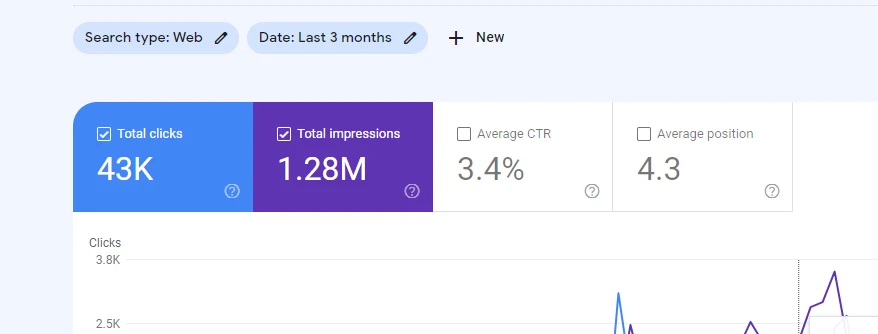
To be clear about what this shows: the guest posts were one part of a wider campaign, and the site already had content worth linking to. Links don’t rescue a weak page. They help a good page get the attention it deserves, and in this niche a few relevant placements were enough to start that.
9. How My Guest Post Pricing Works
I keep the process simple, so you always know what you’re paying for:
- Fixed packages: guest posts start at $150, and each package sets the site quality, article length and turnaround. You know the price before you order.
- Work starts after payment: once you choose and pay for a package, I research sites that meet its requirements and contact the owners.
- You approve every site: you see each proposed site and topic before I write anything.
- One price covers everything: the publisher’s fee, the outreach and an original article written for that site.
- Almost every niche: the only ones I don’t accept are casino, CBD and adult sites.
- Dofollow links in the main text, checked live and reported to you.
- Refund and replacement: if you’re not satisfied, you get a full refund within 3–4 days. If a publisher removes your link later, you get a replacement or your money back.
Packages and the checks I run on every publisher are explained on my page about custom guest post outreach. If you’d rather do it yourself, my guide on how to get backlinks covers the free methods first.
10. Frequently Asked Questions
Short answers to the questions people ask most about guest post pricing.
How much does a guest post cost?
Most guest posts on real websites with genuine traffic cost $70 to $250 in 2026, including the article and the outreach. Finance and health sit at the top of that range. Strong, high-traffic publications cost several hundred dollars or more, and anything under $50 usually means a site that exists to sell links.
Why do finance and health guest posts cost more?
There are fewer good sites in those niches that accept guest posts, and the owners know their links carry weight. Google also holds money and health content to a higher standard, so these sites are more careful about what they publish, which takes more time and costs more.
Is a higher DR worth paying more for?
Only when real traffic and relevance come with it. DR measures a site's links, not its readers, and plenty of sites with a high DR get almost no visitors. A DR 25 site with steady readers in your niche is usually a better buy than a DR 50 site that publishes anything.
Do guest post prices include the article?
It depends on the seller, so always ask. Some marketplaces quote only the publisher's fee and charge extra for writing. My prices include everything: the publisher's fee, the outreach and an original article written for that site.
Why are some guest posts so cheap?
A $20 to $50 guest post can only cover a short article on a site that publishes for anyone who pays. Those sites usually have little real traffic, mix unrelated topics and are easy for Google to spot. The low price reflects what the link is worth.
Is buying guest posts against Google's guidelines?
Google's spam policies treat paying for links, or for posts that contain links, as a link scheme. The real risk comes from patterns: many paid links on irrelevant sites with keyword anchors. A genuinely useful article on a relevant site with real readers is a very different thing, but no seller can honestly promise any paid link is risk-free.
How much should I budget for my first guest posts?
Start with two or three posts on strong, relevant sites rather than ten cheap ones. For most small businesses that means roughly $300 to $700, which is enough to see whether links move your target page before you spend more.
Do guest post prices change over time?
Yes. Sites raise their prices as their traffic grows, and sites that lose traffic after a Google update often lower theirs. That is why any price list, including mine, is a guide rather than a fixed rate.

Want Guest Posts Placed for You?
Choose a package that fits your goals, and I’ll find niche-relevant sites that meet its requirements, write the articles and report every live link. Not sure which package suits your site? Ask me first.